
During its annual spring launch event, Apple introduced a wide range of new devices across its iPhone, iPad, and Mac lineup. Over the course of three days, the company unveiled seven new products, including updated smartphones, powerful new laptop chips, and a surprising addition: the MacBook Neo, Apple’s most affordable laptop ever.
The announcements covered nearly every segment of Apple’s ecosystem—from budget devices aimed at students to high-performance machines built for professionals working with demanding workloads such as video editing and AI development.
Here’s a closer look at the major announcements and what they mean for Apple users.
iPhone 17e: Affordable iPhone With Major Upgrades
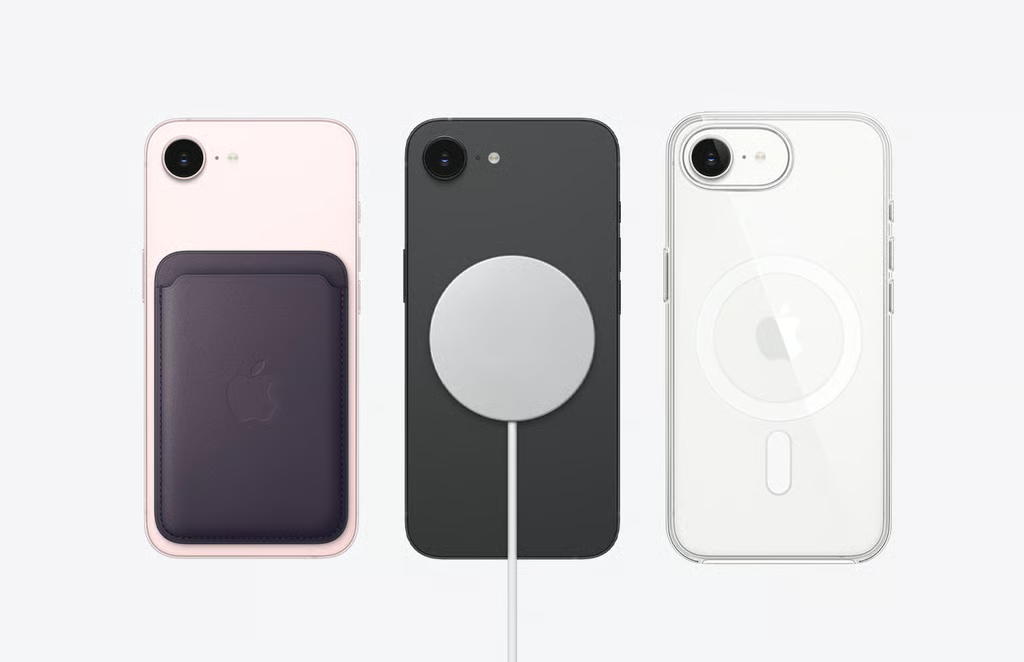
The launch week began with the introduction of the iPhone 17e, designed as the most affordable model in the iPhone 17 family.
Powered by the A19 chip, the device delivers improved speed and efficiency compared with earlier models. Apple also introduced its new C1X cellular modem, which offers faster connectivity and improved power efficiency.
Key features include:
- 48-megapixel Fusion camera with 2× optical-quality zoom
- 4K Dolby Vision video recording at 60fps
- Ceramic Shield 2 display for stronger scratch resistance
- MagSafe support for wireless charging and accessories
- Customizable Action button
For the first time in the “e” lineup, the phone also includes satellite features such as emergency messaging and roadside assistance when no cellular signal is available.
Another major upgrade is storage. The base model now starts with 256GB, double the storage of the previous generation, while maintaining the same $599 starting price.
iPad Air Gets the Powerful M4 Chip
Apple also refreshed the iPad Air with the powerful Apple M4 chip, significantly boosting performance.
The new tablet is available in 11-inch and 13-inch versions and includes:
- 12GB unified memory
- 120GB/s memory bandwidth
- A 16-core Neural Engine for faster AI processing
According to Apple, the new iPad Air is up to 30% faster than the M3 version and more than twice as fast as the M1 model.
Connectivity has also improved with Apple’s N1 wireless chip, enabling Wi-Fi 7 and Bluetooth 6. Combined with the new modem, cellular models deliver faster mobile data speeds and improved battery efficiency.
MacBook Pro Introduces M5 Pro and M5 Max Chips
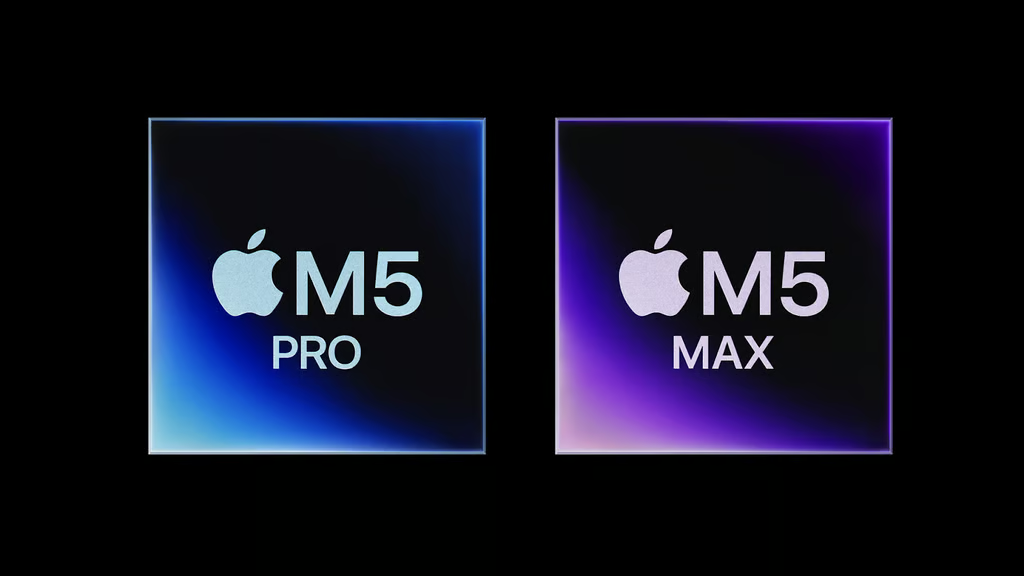
The biggest technical announcement of the week was the new MacBook Pro lineup powered by the M5 Pro and M5 Max processors.
These chips use Apple’s new Fusion Architecture, which combines multiple silicon dies into a single processor to boost performance.
Key specifications include:
- 18-core CPU with six high-performance “super cores”
- Advanced GPU with built-in Neural Accelerators
- Up to 128GB unified memory
- Memory bandwidth up to 614GB/s
Apple says these improvements deliver up to four times the AI processing performance compared with the previous generation.
The laptops also feature:
- Liquid Retina XDR displays
- Thunderbolt 5 connectivity
- 12-megapixel Center Stage camera
- Up to 24 hours of battery life
Prices start at $2,199 for the 14-inch model.
New Studio Displays for Creative Professionals
Alongside the MacBook Pro refresh, Apple introduced two new external monitors: the updated Studio Display and the premium Studio Display XDR.
The standard Studio Display includes:
- 27-inch 5K Retina screen
- 600 nits brightness
- Thunderbolt 5 support
- Six-speaker sound system with deep bass
The new XDR version is designed for professional users such as filmmakers, designers, and photographers. It features a mini-LED backlight with more than 2,000 dimming zones and HDR brightness reaching 2,000 nits.
Prices begin at $1,499 for the standard display and $2,999 for the XDR model.
MacBook Air Gets the M5 Chip
Apple also upgraded the MacBook Air with the new M5 chip.
Available in 13-inch and 15-inch versions, the laptops feature:
- 10-core CPU and GPU
- Improved AI acceleration
- Up to 4TB storage
- Liquid Retina display with 500-nit brightness
Apple claims the new MacBook Air can perform AI tasks up to four times faster than the previous generation.
The base storage has been doubled to 512GB, while battery life remains impressive at up to 18 hours.
MacBook Neo: Apple’s Cheapest Laptop Ever
The biggest surprise announcement was the MacBook Neo, a completely new laptop priced at $599—or $499 for students.
Powered by the A18 Pro chip, the MacBook Neo is designed for:
- Students
- First-time Mac buyers
- Families
- Budget-conscious users
Despite its low price, it still includes strong specifications:
- 13-inch Liquid Retina display
- Up to 16 hours of battery life
- 1080p FaceTime camera
- Wi-Fi 6E and Bluetooth 6
The laptop weighs just 2.7 pounds and comes in colorful finishes such as blush, indigo, silver, and citrus.
Apple also emphasized sustainability, noting that the MacBook Neo uses 60% recycled materials.
Availability
All products announced during the event—including the iPhone 17e, new iPad Air, MacBook Air, MacBook Pro, Studio Displays, and MacBook Neo—are scheduled to go on sale March 11, with preorders already open through Apple’s website and retail stores.
FAQs
What is the biggest announcement from Apple’s launch week?
The biggest surprise was the MacBook Neo, Apple’s cheapest laptop ever at $599, aimed at students and budget users.
What chip powers the new iPhone 17e?
The iPhone 17e runs on Apple’s A19 chip, which offers improved performance and connectivity with the new C1X modem.
How powerful are the new M5 MacBook Pro models?
The new MacBook Pro models with M5 Pro and M5 Max chips deliver major improvements in CPU, GPU, and AI processing performance compared with previous generations.
What improvements were made to the iPad Air?
The updated iPad Air now includes the M4 chip, more memory, faster connectivity, and improved AI capabilities.
When will the new Apple products be available?
All devices announced during Apple’s launch week are scheduled to be available starting March 11, with preorders open beforehand.
Conclusion
Apple’s 2026 spring launch event showcased one of the company’s most diverse product updates in recent years. From the affordable iPhone 17e and MacBook Neo to powerful machines powered by M5 chips, Apple expanded its lineup to cover nearly every price range.
The company’s focus on AI performance, improved connectivity, and better hardware efficiency suggests that future Apple devices will increasingly rely on on-device intelligence. By offering both entry-level products and high-performance machines, Apple is positioning itself to reach a broader audience while continuing to push the limits of computing technology.
Leave a Reply