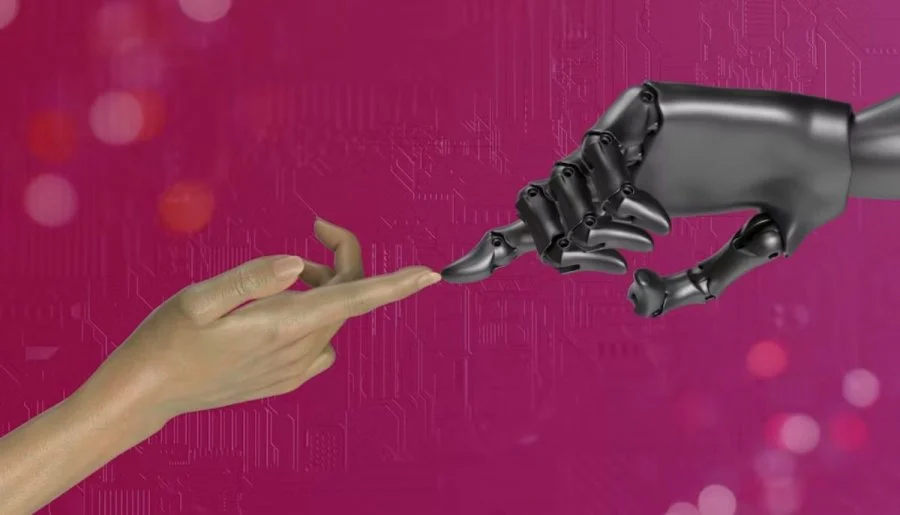
Advances in artificial intelligence and neuroscience are bringing science closer to something once considered impossible: turning human thoughts directly into spoken or written words. Researchers are now using brain signal implants and machine-learning systems to decode signals from the brain and convert them into real-time communication.
This breakthrough could dramatically improve life for people who cannot speak due to paralysis, neurological disorders, or severe injuries. Technologies known as brain–computer interfaces (BCIs) are making it possible to translate imagined speech into text, opening new possibilities for medical treatment and communication.
How the Technology Works
The process begins with small electrode arrays implanted in specific regions of the brain that control speech and language. These implants detect tiny electrical signals produced when a person thinks about speaking.
When someone silently imagines saying a word or sentence, neurons in the brain still activate in patterns similar to actual speech. The electrodes capture these signals and send them to a computer system.
Artificial intelligence algorithms then analyze the neural activity and translate it into words, sentences, or digital commands.
Machine-learning models are trained to recognize patterns in brain signals. Over time, the system becomes better at predicting what the person intends to say, even if no sound is produced.

Turning Imagined Speech Into Real Communication
Recent experiments have shown remarkable progress in this field. Scientists were able to convert imagined speech into text at speeds approaching natural conversation.
In some cases, the systems can detect subtle features such as:
- Tone and rhythm of speech
- Emotional cues
- Silent “inner speech” such as counting or rehearsing phrases
These breakthroughs mean that people who have lost the ability to speak may one day communicate simply by thinking about the words they want to say.
The research is closely related to fields like Neuroscience and Artificial Intelligence, which together are pushing the boundaries of how machines can interpret brain activity.
Hope for Patients With Paralysis or Speech Disorders
One of the most promising uses of this technology is helping individuals who cannot speak due to conditions such as paralysis or brain injuries.
Patients with severe disabilities often rely on slow communication tools like eye-tracking systems or simple keyboards. Brain-computer interfaces could allow them to express thoughts much faster and more naturally.
For people with disorders affecting speech production, such as Amyotrophic Lateral Sclerosis (ALS), these systems may eventually restore the ability to communicate fluidly with family members and caregivers.
Beyond Speech: Images and Thoughts
Researchers are also exploring whether brain signals can generate images or visual reconstructions.
Early studies suggest that AI systems might eventually reconstruct pictures based on what someone imagines or remembers. This could open new doors for studying dreams, hallucinations, and even how animals perceive the world.
Scientists believe these tools may help us better understand complex brain processes like memory, perception, and imagination.
The Role of Tech Companies
Major technology companies are investing heavily in brain-computer interface research.
One of the most well-known efforts comes from Neuralink, founded by Elon Musk, which aims to develop implantable devices that connect the brain directly to computers.
Although progress is rapid, current devices still read signals from only a tiny fraction of the brain’s billions of neurons. This means the technology is still in its early stages and requires significant development before widespread use.
Read More: AI is Transforming the Diagnosis and Treatment of Vision Loss
FAQs
What is a brain–computer interface (BCI)?
A brain–computer interface is a technology that allows direct communication between the human brain and a computer. It works by detecting neural signals and converting them into digital information.
How does AI translate brain signals into words?
AI analyzes patterns of electrical activity recorded by implanted electrodes in the brain. Machine-learning algorithms learn which patterns correspond to specific words or phrases.
Who could benefit from this technology?
People with paralysis, severe speech disorders, or neurological diseases could benefit the most. It could help them communicate without needing to speak or move.
Are brain implants safe?
Brain implants used in research are carefully designed and tested, but they still involve surgery. Scientists are also developing non-invasive alternatives that use external sensors.
When could this technology become widely available?
Experts believe practical communication devices based on this technology could become more common within the next 10–20 years, though more research is needed.
Conclusion
The ability to translate brain signals into words represents one of the most exciting frontiers in modern science. By combining advances in artificial intelligence with neuroscience, researchers are building systems that could allow people to communicate directly through their thoughts.
Although the technology is still developing, early experiments show that real-time thought-to-speech communication may soon become possible. In the future, brain-computer interfaces could transform medicine, reshape human communication, and deepen our understanding of how the human mind works.
Leave a Reply