At the Mobile World Congress 2026 (MWC 2026), one of the world’s biggest technology exhibitions, Lenovo unveiled a bold vision for the future of personal computing. Instead of focusing only on faster processors and thinner laptops, the company introduced technologies designed to transform how humans interact with devices.
Lenovo’s announcements centered on ambient artificial intelligence, modular hardware, and immersive computing. The highlight was the debut of Lenovo Qira, a system-level AI assistant designed to operate seamlessly across multiple devices without requiring users to constantly launch apps or type prompts.
Alongside this new AI platform, Lenovo revealed experimental devices and concepts such as the ThinkBook Modular AI PC Concept, the Yoga Book Pro 3D laptop, and the Legion Go Fold gaming handheld. Together, these innovations highlight Lenovo’s strategy of building a computing ecosystem where technology becomes more adaptive, more portable, and more personal.
This article explores Lenovo’s key announcements at MWC 2026, the potential impact of ambient AI, and what these developments could mean for the future of laptops, gaming devices, and creative workstations.
Lenovo’s Vision: Technology That Works in the Background
For decades, personal computing has been based on direct interaction—users open an app, search for files, or issue commands.
At MWC 2026, Lenovo introduced a different concept: technology that anticipates needs before users ask.
According to Luca Rossi, President of Lenovo’s Intelligent Devices Group, the next phase of computing will not revolve around a single device or platform.
Instead, it will rely on connected AI systems that operate across smartphones, laptops, tablets, and wearables simultaneously.
This approach aims to eliminate friction in everyday workflows by creating an intelligent ecosystem of devices that communicate and adapt automatically.
Meet Lenovo Qira: Ambient AI That Understands Context
The biggest announcement at MWC 2026 was the launch of Lenovo Qira, a new AI assistant designed to function as “Personal Ambient Intelligence.”
Unlike conventional assistants that rely on voice commands or typed prompts, Qira works at the operating-system level, constantly analyzing context to provide relevant assistance.
Key Features of Lenovo Qira
Cross-Device Intelligence
Qira operates across more than 20 Lenovo devices, including those from the ThinkPad and Yoga laptop families.
This means users can begin a task on one device and continue seamlessly on another.
For example:
- Researching information on a smartphone
- Opening a laptop later
- Finding all related tabs and documents already prepared
This capability eliminates the need to manually transfer files or reopen resources.
“Next Move” Predictive Assistance
One of Qira’s most impressive capabilities is its Next Move feature, which predicts user actions.
Imagine preparing a presentation on your phone during your commute. When you open your laptop at work, Qira already loads:
- The documents you were editing
- Related research
- Recently used applications
This predictive approach aims to save time and reduce interruptions during work.
Real-Time Context Awareness
Another standout capability is Qira’s ability to interpret real-world situations.
For example:
- When arriving at an airport, the AI may automatically display your boarding pass.
- When approaching a scheduled meeting, it may open your notes or presentation slides.
This proactive assistance transforms the assistant from a reactive tool into a context-aware digital companion.
ThinkBook Modular AI PC Concept: Carry Small, Work Big
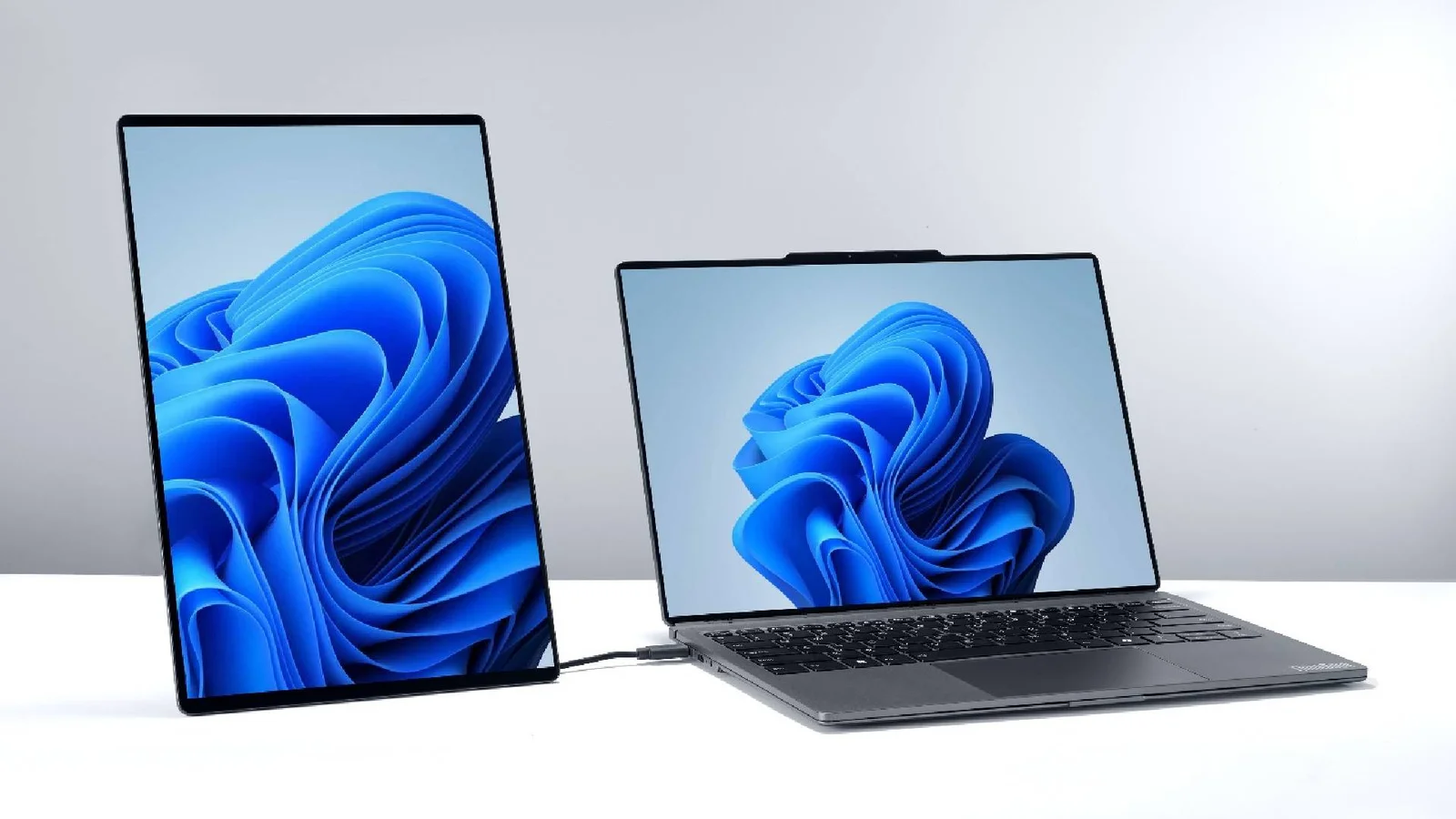
Another major highlight at MWC 2026 was the ThinkBook Modular AI PC Concept.
This experimental laptop tackles a common challenge faced by professionals and travelers: balancing portability with productivity.
A Transforming Laptop Design
The concept features a 14-inch base laptop that can expand into a 19-inch dual-screen workstation.
Users can achieve this transformation by replacing the keyboard module with a second display.
This modular approach offers flexibility for:
- Business travelers
- Remote workers
- Creative professionals
Instead of carrying multiple monitors or accessories, users can create a larger workspace from a compact device.
Sustainability and Longevity
Another important aspect of the ThinkBook concept is sustainability.
The modular design includes:
- Interchangeable I/O ports
- Detachable components
- Upgradeable modules
This approach reduces electronic waste by allowing users to upgrade individual parts rather than replacing the entire laptop.
Lenovo’s ThinkBook product range typically starts around $1,000 AUD, making it accessible to professionals and small businesses.
New ThinkPad and Tablet Innovations
Lenovo also showcased updates to its iconic business laptop lineup.
Devices like the ThinkPad T-Series continue to target enterprise users who prioritize durability, security, and productivity.
Meanwhile, portable devices such as the ThinkPad X13 Detachable and ThinkTab X11 highlight Lenovo’s efforts to bridge the gap between tablets and traditional laptops.
These devices provide flexibility for professionals who need both:
- The portability of a tablet
- The productivity of a laptop

Gaming and Creativity Without Boundaries
Beyond business laptops, Lenovo introduced exciting prototypes aimed at gamers and digital creators.
Two devices attracted significant attention during the event.
Yoga Book Pro 3D: A Glasses-Free 3D Laptop
The Yoga Book Pro 3D represents a breakthrough in immersive computing.
Unlike traditional 3D displays that require special glasses, this laptop uses advanced display technology to create glasses-free spatial visuals.
Even more impressive, AI algorithms can convert 2D content into 3D objects in real time.
Why This Matters
For professionals such as:
- 3D designers
- Digital artists
- Game developers
- Architects
This technology could dramatically improve how they visualize and interact with creative projects.
Instead of viewing flat images, creators can manipulate spatial designs directly on their laptop screen.
Legion Go Fold: A New Kind of Gaming Handheld
Gaming enthusiasts were also excited about the Legion Go Fold, a foldable gaming device.
The handheld features:
- A 7.7-inch portable display
- A folding design that expands to 11.6 inches
This allows players to carry a compact device while still enjoying a larger immersive display when needed.
The Legion series has already built a strong reputation among gamers, and this foldable concept suggests the future of portable gaming hardware.
Smarter AI Across the Entire Lenovo Ecosystem
Lenovo’s broader strategy is to create a connected AI ecosystem spanning multiple devices.
According to Luca Rossi, the future of computing will be defined by intelligent systems that operate across platforms, rather than individual gadgets.
By combining hardware innovation with AI integration, Lenovo aims to deliver:
- More connected devices
- More intuitive interactions
- More personalized computing experiences
This vision extends beyond PCs to include:
- Smartphones
- Tablets
- Wearables
- Smart home devices
Ultimately, the goal is to make technology blend naturally into everyday life.
Why Lenovo’s MWC 2026 Announcements Matter
Lenovo’s presentations at MWC 2026 highlight several emerging trends in the tech industry:
Ambient AI
AI that works quietly in the background rather than waiting for commands.
Device Ecosystems
Seamless interaction between smartphones, laptops, tablets, and wearables.
Modular Hardware
Devices designed to evolve and upgrade instead of being replaced.
Immersive Displays
Technologies such as glasses-free 3D and foldable screens.
These trends could shape the next generation of computing experiences.
FAQs
What did Lenovo announce at MWC 2026?
Lenovo introduced several innovations including the Lenovo Qira AI assistant, the ThinkBook Modular AI PC Concept, the Yoga Book Pro 3D laptop, and the Legion Go Fold gaming device.
What is Lenovo Qira?
Lenovo Qira is an ambient AI assistant that works across multiple devices, anticipating user needs and providing proactive assistance without requiring manual commands.
What makes the ThinkBook Modular AI PC unique?
It features a modular design that allows a 14-inch laptop to expand into a 19-inch dual-screen workstation, offering flexibility and portability.
How does the Yoga Book Pro 3D work?
The laptop uses advanced display technology and AI to create glasses-free 3D visuals, converting 2D content into 3D objects in real time.
What is the Legion Go Fold?
The Legion Go Fold is a foldable gaming handheld that expands from a 7.7-inch display to an 11.6-inch screen for a more immersive gaming experience.
Conclusion
Lenovo’s announcements at Mobile World Congress 2026 reveal a clear direction for the future of computing: technology that adapts to people instead of forcing people to adapt to technology.
- The introduction of Lenovo Qira signals a shift toward ambient AI, where devices anticipate user needs and provide assistance seamlessly across platforms.
- Meanwhile, concepts like the ThinkBook Modular AI PC Concept demonstrate how modular design could redefine portability and productivity. Innovations such as the Yoga Book Pro 3D and Legion Go Fold also highlight the growing importance of immersive displays and flexible hardware.
- Together, these technologies suggest a future where laptops, smartphones, and other devices form an intelligent ecosystem that works quietly in the background, supporting creativity, productivity, and entertainment without constant user input.
If Lenovo’s vision becomes reality, the next generation of personal computing may feel less like using machines—and more like collaborating with intelligent digital partners.
Leave a Reply